Four Famous Inkstones
Introduction
The Four Famous Inkstones of China - Duan, She, Tao, and Chengni - are significant cultural artifacts that embody the rich tradition of Chinese calligraphy and painting. Renowned for their unique textures and histories, these inkstones are esteemed not just for their functionality but also for their artistic and historical value. Each inkstone originates from a distinct geographical area in China and is crafted through specialized techniques that have been passed down through generations. Together with brushes, ink, and paper, these inkstones constitute the "four treasures" of the Chinese scholar's studio, reflecting the deep cultural heritage and artistic refinement of ancient China.
Duan Inkstone
Duan Inkstone is perhaps the most renowned among the Four Famous Inkstones. Originating from the Duanxi River area near Zhaoqing, in Guangdong province, the Duan inkstone is prized for its fine, smooth texture and beautiful colors. The stone used for making Duan inkstones is primarily greenish-purple, but can also feature a range of other hues and a distinctive plum flower pattern. This inkstone is noted for its ability to produce a fine and smooth ink, enhancing the calligrapher's or painter's work. Due to its unique geological properties, the Duan inkstone is also highly durable and resistant to cracking, maintaining its utility and beauty over time.
Its history dates back to the Tang Dynasty (618-907 AD), and it gained significant prominence during the Song Dynasty (960-1279 AD). The crafting of Duan inkstones is seen not only as a skill but as an art form, with artisans often integrating intricate carvings and designs into the stone. This elegant craftsmanship has made Duan inkstones treasured items for collectors and scholars alike. The Rugao Museum holds a Duan inkstone from the Ming Dynasty, showcasing its historical and cultural significance as a national second-class cultural relic.
She Inkstone
The She Inkstone comes from the Shexian county in Anhui province, known for its rich deposits of high-quality stone. This inkstone is celebrated for its dense and delicate texture, providing an excellent surface for grinding ink sticks. The She inkstone's aesthetic appeal is enhanced by its unique natural patterning, which resembles blossoms scattered across the stone’s surface, creating a visually pleasing effect that complements its function.
Historically, the She Inkstone has been favored by scholars and artists for its smooth surface that facilitates the even grinding of ink without wearing down the brush. The production of She inkstones is deeply embedded in the local culture of Jiangwan Scenic Area, a place renowned for its Hui-style architecture and traditional arts. The skill of She inkstone carving is considered an intangible cultural heritage, and modern artisans have continued to innovate within this tradition.
Tao Inkstone
The Tao Inkstone, originating from Yaoyan township in Gansu province, boasts a history of over 1,300 years. It is known for its viridity, durability, and artistic appeal. Unlike other inkstones, the Tao Inkstone is silent when tapped, a quality that underscores its dense structure. This inkstone is highly efficient in generating ink and causes minimal wear to brushes, maintaining ink moisture for extended periods.
Tao Inkstones are esteemed by collectors, scholars, and artists for their functionality and beauty. Over the centuries, they have been lauded in literature and prized by connoisseurs. The crafting of a Tao Inkstone involves meticulous attention to detail, ensuring that each stone not only serves its practical purpose but also stands as a piece of art. This timeless appeal has made the Tao Inkstone a favorite among both historical figures and modern enthusiasts.
Chengni Inkstone
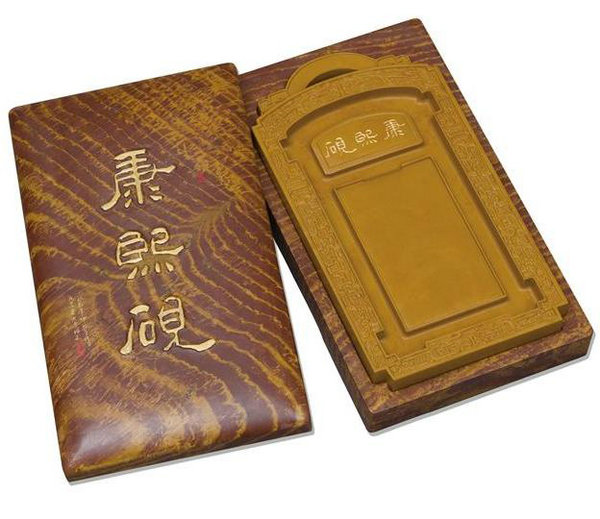
The Chengni Inkstone, renowned for its fine texture that minimizes damage to brushes, showcases the rich craftsmanship of Shanxi province. This ceramic inkstone dates back to the brick and tile techniques of the Qin and Han dynasties and has been continually refined over the centuries. It reached its peak during the Tang and Song dynasties, when it was honored as a "tribute inkstone." With a history spanning over a thousand years, the Chengni inkstone is the only ceramic inkstone among China's Four Famous Inkstones. Made from a unique type of refined clay and meticulously fired, it displays a variety of colors, sometimes featuring multiple hues on a single piece. The carving craftsmanship is particularly exquisite.
Crafted from carefully washed clay, the Chengni Inkstone has an extremely fine texture that feels as smooth as a baby's skin. It is renowned for its ability to retain water without drying out, remain unfrozen in cold conditions, and produce ink without damaging brush bristles. Its moisture-retaining properties are comparable to those of high-quality stone inkstones, making it highly esteemed by scholars throughout history. In 2008, the craftsmanship of the Chengni inkstone was officially included in the National Intangible Cultural Heritage List, ensuring the protection and preservation of this precious cultural heritage.
Preservation and Care
The preservation and care of the Four Famous Inkstones are crucial to maintaining their durability and functionality. These inkstones, being crafted from natural materials, require specific conditions to ensure their longevity. It is essential to keep them in a stable environment, avoiding extreme temperatures and humidity that could lead to cracking or other forms of damage. Regular use and gentle cleaning with soft brushes or cloth can help maintain the stone's surface and prevent the accumulation of residues.
Proper storage involves keeping the inkstones in a dry, cool place, ideally within a protective case or wrapped in soft cloth to prevent accidental damage. Collectors and users should handle the inkstones with clean hands to prevent oils from affecting the stone’s texture. Additionally, avoiding prolonged exposure to direct sunlight can help preserve the stone's natural color and pattern.








